Buy ksbforum.eu ?
We are moving the project
ksbforum.eu .
Are you interested in purchasing the domain
ksbforum.eu ?
domain@kv-gmbh.de · 0541-91531010
Buy ksbforum.eu ?
How do you transform an object clause or a subject clause into a dependent clause (subordinate clause)?
To transform an object clause or a subject clause into a dependent clause, you can add a subordinating conjunction at the beginning of the clause. For example, changing "I know that he is coming" (object clause) to "I know when he is coming" (dependent clause). Another way is to remove the subject or object pronoun and change the verb form to make it dependent on the main clause. For instance, changing "She believes she can win" (subject clause) to "She believes she can win" (dependent clause). **
What are main clause-subordinate clause constructions?
Main clause-subordinate clause constructions are sentences that consist of a main clause and one or more subordinate clauses. The main clause is a complete sentence that can stand alone, while the subordinate clause depends on the main clause for its meaning and cannot stand alone. Subordinate clauses often begin with subordinating conjunctions such as "because," "although," "if," or "when," and they provide additional information or context to the main clause. These constructions allow for more complex and nuanced sentence structures, and they are commonly used in both spoken and written language. **


Similar search terms for Clause
Top-Angebote
Products related to Clause:
-
Daily Deals Depot Santa Clause Peeker Yard Ornament, Christmas Fence Decoration, Indoor Outdoor Holiday Placard, DIY Festival Gift redBring the festive spirit to life with this Christmas Fence Ornament Santa Clause Peeker Yard Decoration, the perfect way to surprise neighbors and delight guests this holiday season. Designed for indoor and outdoor use, this charming Santa Clause...21,97 $*Shipping: 0,00 $Secure redirect to the provider
-
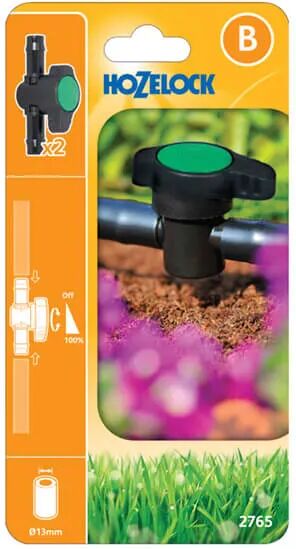
Hozelock Automatic Watering 13mm Flow Control ValvesTake full control of your garden irrigation with the Hozelock 13mm Flow Control Valves, specially designed to regulate water flow within low-pressure automatic watering systems. Perfect for use with Hozelock’s 13mm irrigation supply pipes, these inline valves give you precision control over individual watering zones. Whether you need to isolate parts of your system or simply adjust water flow to suit specific plant needs, these durable flow control valves are the ideal solution. Easily fitted in-line to your existing 13mm supply pipe, they allow you to reduce or shut off water flow as required, helping to conserve water and tailor delivery to each area of your garden. Made from UV-resistant materials, these valves are built to withstand outdoor conditions, ensuring long-lasting performance season after season. Ideal for use in flower beds, borders, vegetable gardens, greenhouses, and more, these valves make it easy to customise irrigation to suit plant type, location, and water requirements. Supplied as a set of two and covered by a manufacturer's 2-year guarantee.15,49 £*Shipping: 3,50 £Secure redirect to the provider
-
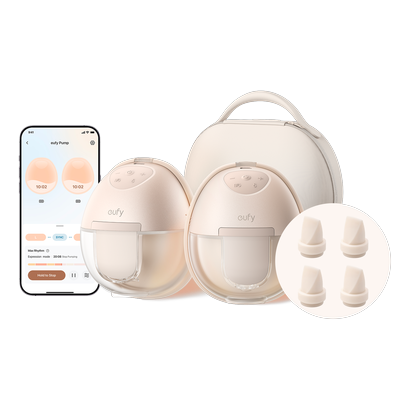
eufy Breast Pump S1 Pro & Duckbill Valves (4-Pack) eufy Breast Pump S1 Pro & Original Duckbill Valves (4-Pack)HSA/FSA Eligible: Save with pre-tax health dollars. Breast pump S1 pro: The Innovative Heated Wearable Breast Pump: Groundbreaking HeatFlow™ technology prevents clogs and boosts your output by 30%¹. Enjoy high-efficiency pumping with spa-like...354,99 $*Shipping: 0,00 $Secure redirect to the provider
-
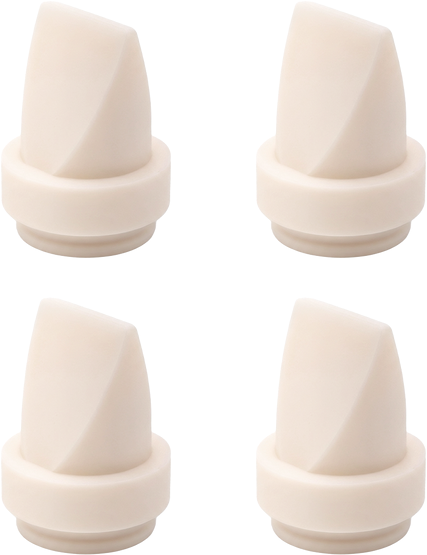
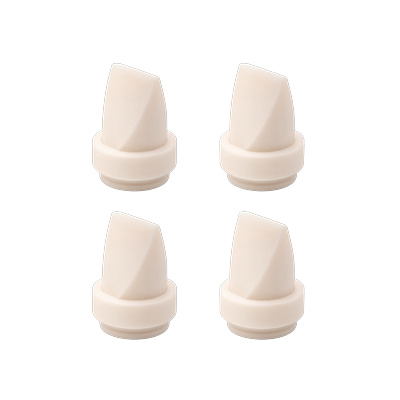
eufy Wearable Breast Pump E10/E20/S1/S1 Pro Original Duckbill Valves (4-Pack) E10/E20/S1/S1 Pro Original Duckbill Valves (4-Pack)Compatibility:Compatible with eufy Breast Pump E10 / E20 / S1 / S1 Pro. Closed, Anti-Blackflow Design: Designed to prevent backflow of breast milk and help direct milk to the bottom of the container, ensuring no loss of suction. The slit on the valve tips remains closed when not pumping. Food-Grade Silicone: Made from durable, BPA-free, food-grade silicone, the duckbill valves are soft, odorless, and skin-friendly for both mother and baby. The snug fit offers comfort and efficient pumping. Easy to Clean: Wash with warm, soapy water and rinse well after each use. To deep clean, use boiling water or steam at no more than 100℃ (212℉) for 5-10 minutes. Avoid hard brushes; use fingertips instead. Guaranteed Reliability: eufy breast pump accessories are covered by a 90-day limited manufacturer's warranty. Lifespan: Typically lasts 1-3 months. Replace if suction and performance decrease with use and sterilization, or based on your usage.29,99 £*Shipping: 0,00 £Secure redirect to the provider

-
Is an infinitive clause a subordinate clause?
Yes, an infinitive clause is a type of subordinate clause. It functions as a single unit within a sentence and is dependent on the main clause for its meaning. Infinitive clauses typically begin with the word "to" followed by a verb, and they can serve various purposes such as expressing purpose, result, or obligation. **
-
Can an adverbial clause also be a subject clause or an object clause?
No, an adverbial clause cannot be a subject clause or an object clause. An adverbial clause functions as an adverb to modify a verb, adjective, or adverb in a sentence. Subject clauses and object clauses, on the other hand, serve as the subject or object of the main clause, respectively. Each type of clause has a specific grammatical function within a sentence. **
-
Is the main clause and subordinate clause correct?
To determine if the main clause and subordinate clause are correct, you need to ensure that they are grammatically sound and that they make sense when combined. The main clause should be able to stand alone as a complete sentence, while the subordinate clause provides additional information but cannot stand alone. Checking for subject-verb agreement and proper punctuation between the two clauses can help confirm their correctness. **
-
Is the accompanying clause in direct speech a main clause or a subordinate clause?
The accompanying clause in direct speech can be either a main clause or a subordinate clause, depending on its role in the sentence. If the clause is expressing a complete thought and can stand alone as a sentence, then it is a main clause. However, if the clause is dependent on the rest of the sentence for its meaning and cannot stand alone, then it is a subordinate clause. It's important to consider the context and structure of the sentence to determine the role of the accompanying clause in direct speech. **

How do I recognize a relative clause, a conjunctional clause, and an interrogative clause?
A relative clause typically starts with a relative pronoun (such as who, whom, whose, which, or that) and provides more information about a noun in the main clause. A conjunctional clause, on the other hand, is introduced by a conjunction (such as and, but, or because) and connects two independent clauses. An interrogative clause is a type of clause that asks a question and is typically introduced by an interrogative pronoun (such as who, what, when, where, why, or how) or an interrogative adverb (such as how, when, or where). **
How can I recognize a relative clause, a conjunctional clause, and an interrogative clause?
A relative clause is a type of dependent clause that typically starts with a relative pronoun (such as who, whom, whose, which, or that) and provides additional information about a noun in the main clause. A conjunctional clause, on the other hand, is a dependent clause that functions as an adverb, adjective, or noun in a sentence and is connected to the main clause by a conjunction (such as because, although, if, when, etc.). An interrogative clause is a type of clause that asks a question and typically begins with a question word (such as who, what, where, when, why, or how) or with a helping verb followed by the subject. **
Top-Angebote
Products related to Clause:
-
Combo Retail Shop Christmas Fence Ornaments, Santa Clause Peeker, Yard Ornaments, Indoor Outdoor, DIY Festival Gift greenBring the magic of the holidays to your home with these charming Christmas Fence Ornaments. Featuring a playful Santa Clause Peeker, these yard decorations are perfect for both indoor and outdoor spaces. Crafted to brighten your garden, lawn, or...44,97 $*Shipping: 0,00 $Secure redirect to the provider
-
ModernMart Christmas Fence Decoration: Santa, Snowman, Reindeer, Penguin Peeker Ornaments For Indoor Outdoor Festivities Color: Santa ClauseChristmas Fence Decoration Santa Clause Snowman Reindeer Penguin Peeker Yard Ornaments Indoor Outdoor Festival Gift Christmas Fence Decoration Santa Clause Snowman Reindeer Penguin Peeker Brand new & high quality Material: PP plastic Color:...20,00 $*Shipping: 0,00 $Secure redirect to the provider
-
Daily Deals Depot Santa Clause Peeker Yard Ornament, Christmas Fence Decoration, Indoor Outdoor Holiday Placard, DIY Festival Gift redBring the festive spirit to life with this Christmas Fence Ornament Santa Clause Peeker Yard Decoration, the perfect way to surprise neighbors and delight guests this holiday season. Designed for indoor and outdoor use, this charming Santa Clause...21,97 $*Shipping: 0,00 $Secure redirect to the provider
-
Hozelock Automatic Watering 13mm Flow Control ValvesTake full control of your garden irrigation with the Hozelock 13mm Flow Control Valves, specially designed to regulate water flow within low-pressure automatic watering systems. Perfect for use with Hozelock’s 13mm irrigation supply pipes, these inline valves give you precision control over individual watering zones. Whether you need to isolate parts of your system or simply adjust water flow to suit specific plant needs, these durable flow control valves are the ideal solution. Easily fitted in-line to your existing 13mm supply pipe, they allow you to reduce or shut off water flow as required, helping to conserve water and tailor delivery to each area of your garden. Made from UV-resistant materials, these valves are built to withstand outdoor conditions, ensuring long-lasting performance season after season. Ideal for use in flower beds, borders, vegetable gardens, greenhouses, and more, these valves make it easy to customise irrigation to suit plant type, location, and water requirements. Supplied as a set of two and covered by a manufacturer's 2-year guarantee.15,49 £*Shipping: 3,50 £Secure redirect to the provider
-
How do you transform an object clause or a subject clause into a dependent clause (subordinate clause)?
To transform an object clause or a subject clause into a dependent clause, you can add a subordinating conjunction at the beginning of the clause. For example, changing "I know that he is coming" (object clause) to "I know when he is coming" (dependent clause). Another way is to remove the subject or object pronoun and change the verb form to make it dependent on the main clause. For instance, changing "She believes she can win" (subject clause) to "She believes she can win" (dependent clause). **
-
What are main clause-subordinate clause constructions?
Main clause-subordinate clause constructions are sentences that consist of a main clause and one or more subordinate clauses. The main clause is a complete sentence that can stand alone, while the subordinate clause depends on the main clause for its meaning and cannot stand alone. Subordinate clauses often begin with subordinating conjunctions such as "because," "although," "if," or "when," and they provide additional information or context to the main clause. These constructions allow for more complex and nuanced sentence structures, and they are commonly used in both spoken and written language. **
-
Is an infinitive clause a subordinate clause?
Yes, an infinitive clause is a type of subordinate clause. It functions as a single unit within a sentence and is dependent on the main clause for its meaning. Infinitive clauses typically begin with the word "to" followed by a verb, and they can serve various purposes such as expressing purpose, result, or obligation. **
-
Can an adverbial clause also be a subject clause or an object clause?
No, an adverbial clause cannot be a subject clause or an object clause. An adverbial clause functions as an adverb to modify a verb, adjective, or adverb in a sentence. Subject clauses and object clauses, on the other hand, serve as the subject or object of the main clause, respectively. Each type of clause has a specific grammatical function within a sentence. **
Similar search terms for Clause
-
eufy Breast Pump S1 Pro & Duckbill Valves (4-Pack) eufy Breast Pump S1 Pro & Original Duckbill Valves (4-Pack)HSA/FSA Eligible: Save with pre-tax health dollars. Breast pump S1 pro: The Innovative Heated Wearable Breast Pump: Groundbreaking HeatFlow™ technology prevents clogs and boosts your output by 30%¹. Enjoy high-efficiency pumping with spa-like...354,99 $*Shipping: 0,00 $Secure redirect to the provider
-
eufy Wearable Breast Pump E10/E20/S1/S1 Pro Original Duckbill Valves (4-Pack) E10/E20/S1/S1 Pro Original Duckbill Valves (4-Pack)Compatibility:Compatible with eufy Breast Pump E10 / E20 / S1 / S1 Pro. Closed, Anti-Blackflow Design: Designed to prevent backflow of breast milk and help direct milk to the bottom of the container, ensuring no loss of suction. The slit on the valve tips remains closed when not pumping. Food-Grade Silicone: Made from durable, BPA-free, food-grade silicone, the duckbill valves are soft, odorless, and skin-friendly for both mother and baby. The snug fit offers comfort and efficient pumping. Easy to Clean: Wash with warm, soapy water and rinse well after each use. To deep clean, use boiling water or steam at no more than 100℃ (212℉) for 5-10 minutes. Avoid hard brushes; use fingertips instead. Guaranteed Reliability: eufy breast pump accessories are covered by a 90-day limited manufacturer's warranty. Lifespan: Typically lasts 1-3 months. Replace if suction and performance decrease with use and sterilization, or based on your usage.29,99 £*Shipping: 0,00 £Secure redirect to the provider
-
eufy Duckbill Valves (4-Pack) for Wearable Breast Pump E10/E20/S1/S1 Pro E10/E20/S1/S1 Pro Original Duckbill Valves (4-Pack)HSA/FSA Eligible: Save with pre-tax health dollars. Compatibility:Compatible with eufy Breast Pump E10 / E20 / S1 / S1 Pro. Closed, Anti-Blackflow Design: Designed to prevent backflow of breast milk and help direct milk to the bottom of the...19,99 $*Shipping: 0,00 $Secure redirect to the provider
-
Is the main clause and subordinate clause correct?
To determine if the main clause and subordinate clause are correct, you need to ensure that they are grammatically sound and that they make sense when combined. The main clause should be able to stand alone as a complete sentence, while the subordinate clause provides additional information but cannot stand alone. Checking for subject-verb agreement and proper punctuation between the two clauses can help confirm their correctness. **
-
Is the accompanying clause in direct speech a main clause or a subordinate clause?
The accompanying clause in direct speech can be either a main clause or a subordinate clause, depending on its role in the sentence. If the clause is expressing a complete thought and can stand alone as a sentence, then it is a main clause. However, if the clause is dependent on the rest of the sentence for its meaning and cannot stand alone, then it is a subordinate clause. It's important to consider the context and structure of the sentence to determine the role of the accompanying clause in direct speech. **
-
How do I recognize a relative clause, a conjunctional clause, and an interrogative clause?
A relative clause typically starts with a relative pronoun (such as who, whom, whose, which, or that) and provides more information about a noun in the main clause. A conjunctional clause, on the other hand, is introduced by a conjunction (such as and, but, or because) and connects two independent clauses. An interrogative clause is a type of clause that asks a question and is typically introduced by an interrogative pronoun (such as who, what, when, where, why, or how) or an interrogative adverb (such as how, when, or where). **
-
How can I recognize a relative clause, a conjunctional clause, and an interrogative clause?
A relative clause is a type of dependent clause that typically starts with a relative pronoun (such as who, whom, whose, which, or that) and provides additional information about a noun in the main clause. A conjunctional clause, on the other hand, is a dependent clause that functions as an adverb, adjective, or noun in a sentence and is connected to the main clause by a conjunction (such as because, although, if, when, etc.). An interrogative clause is a type of clause that asks a question and typically begins with a question word (such as who, what, where, when, why, or how) or with a helping verb followed by the subject. **
* All prices are inclusive of VAT and, if applicable, plus shipping costs. The offer information is based on the details provided by the respective shop and is updated through automated processes. Real-time updates do not occur, so deviations can occur in individual cases. ** Note: Parts of this content were created by AI.