Buy ksbforum.eu ?
We are moving the project
ksbforum.eu .
Are you interested in purchasing the domain
ksbforum.eu ?
domain@kv-gmbh.de · 0541-91531010
Buy ksbforum.eu ?
What is the difference between chlorine and chlorine dioxide?
Chlorine is a chemical element with the symbol Cl and is a strong oxidizing agent commonly used for disinfection purposes. Chlorine dioxide, on the other hand, is a chemical compound with the formula ClO2 and is also used as a disinfectant but is considered to be a more effective and safer alternative to chlorine. Chlorine dioxide is a yellow to reddish gas at room temperature, while chlorine is a greenish-yellow gas. Additionally, chlorine dioxide is less likely to form harmful byproducts compared to chlorine. **
Why do two chlorine atoms combine to form a chlorine molecule?
Two chlorine atoms combine to form a chlorine molecule because each chlorine atom has seven electrons in its outer shell, making them highly reactive and likely to form a covalent bond. By sharing one electron each, the two chlorine atoms can achieve a stable electron configuration with a full outer shell of eight electrons, similar to the noble gas configuration. This sharing of electrons allows the two atoms to become more stable and lower their overall energy, forming a strong bond between them. **

Similar search terms for Chlorine
Top-Angebote
Products related to Chlorine:
-
iSpring WCB32C-GAC 3-Stage Whole House Water Filtration System, Reduces Chloramine, PFAS, Chlorine, Sediments, 5-MicronComplete Home Filtration: Our advanced 3-stage whole house water filter system ensures thorough water purification for your entire home, covering every tap, shower, laundry, and dishwasher. Experience unmatched clarity in every drop.183,99 $*Shipping: 0,00 $Secure redirect to the provider
-
iSpring WGB22BF2 2-Stage Whole House Water Filtration System, Reduces Rust, Chlorine, Odors & Cloudiness, w/Extra Filter SetComprehensive Protection for Your Home – Effectively reduces up to 99% of chlorine and up to 95% of sediment, rust, odors, bad taste, herbicides, industrial solvents, and other common contaminants.402,96 $*Shipping: 0,00 $Secure redirect to the provider
-
iSpring WGB32B-CPB 3-Stage Whole House Water Filtration System, Removes Sediment, Chlorine, Chloramines, Odor & Lead, UV FilterTargeted Contaminant Reduction: Reduces sediment, dirt, sand, rust, chlorine, and odor to improve taste; removes up to 99% lead and reduces arsenic (III & V), mercury, and cadmium. 3-Stage High-Efficiency Design: Built with a sediment filter, carbon…1149,99 $*Shipping: 0,00 $Secure redirect to the provider
-
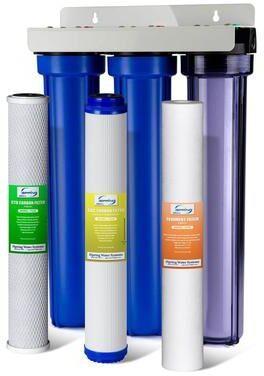
iSpring WGB21B 2-Stage Whole House Water Filtration System, Reduces Sediment, Chlorine, Taste, and Odor, w/Extra Filter SetPowerful 2-Stage Filtration - Reduces sediment, rust, chlorine, unpleasant tastes and odors, as well as volatile organic compounds (VOCs) such as pesticides, herbicides, and industrial solvents—providing cleaner, safer water to every faucet in your...318,99 $*Shipping: 0,00 $Secure redirect to the provider


-
Do you like chlorine?
As an AI language model, I don't have personal preferences. However, chlorine is commonly used to disinfect water and swimming pools, which helps to keep them clean and safe for use. While chlorine has its benefits, it is important to use it in appropriate concentrations and handle it with care due to its potential hazards. **
-
How is chlorine used?
Chlorine is commonly used for disinfection in water treatment plants to kill bacteria, viruses, and other microorganisms. It is also used in the production of a wide range of products including plastics, solvents, pesticides, and pharmaceuticals. In addition, chlorine is used in the production of bleach for cleaning and disinfecting purposes. Overall, chlorine plays a crucial role in maintaining public health and safety, as well as in various industrial processes. **
-
Why doesn't chlorine dissolve?
Chlorine is a gas at room temperature and pressure, and it does not dissolve in water because it is not polar. Water is a polar molecule, meaning it has a positive and negative end, which allows it to dissolve other polar substances. However, chlorine is nonpolar, so it does not interact with water molecules in a way that allows it to dissolve. Instead, chlorine reacts with water to form a mixture of hydrochloric acid and hypochlorous acid. **
-
Is chlorine an alkane?
No, chlorine is not an alkane. Chlorine is a chemical element with the symbol Cl and atomic number 17. It is a member of the halogen group and exists as a diatomic molecule (Cl2) in its natural state. Alkanes, on the other hand, are a group of hydrocarbons with single bonds between carbon atoms and are not related to chlorine. **


What are chlorine vapors?
Chlorine vapors are the gaseous form of chlorine, a highly reactive and toxic chemical element. These vapors are produced when chlorine gas evaporates into the air. Inhalation of chlorine vapors can cause irritation to the respiratory system, eyes, and skin, and can be harmful or even fatal in high concentrations. Chlorine vapors are commonly used in disinfectants, bleaches, and water treatment processes. **
Does chlorine damage hair?
Chlorine can damage hair by stripping away its natural oils, leading to dryness and brittleness. It can also cause the hair cuticle to become rough and frayed, making the hair more prone to breakage and split ends. To minimize damage from chlorine, it is recommended to wet the hair with clean water before swimming, use a swim cap, and rinse the hair thoroughly with fresh water after swimming to remove chlorine residue. Additionally, using a clarifying shampoo or deep conditioning treatment can help restore moisture and repair any damage caused by chlorine exposure. **
Top-Angebote
Products related to Chlorine:
-
iSpring WGB32B-MKS Whole House Water Filtration System, Sediment, Iron, Hydrogen Sulfide, PFAS, Lead, Chlorine, ManganeseCutting-Edge Filtration: Our system employs advanced water purification with three specialized filters. The first-stage FP25B polypropylene sediment filter captures minute particles (down to 5 microns).703,99 $*Shipping: 0,00 $Secure redirect to the provider
-
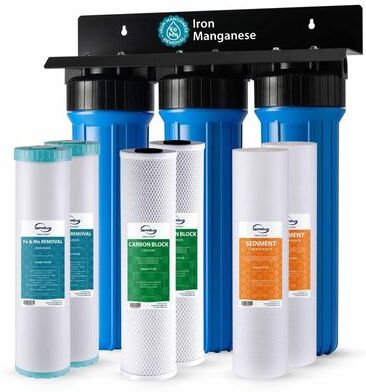
iSpring WGB32BM Whole House Water Filtration System, Iron, Manganese, Chlorine, Sediment, Taste & Odor, Includes 3 extra filtersWhole house water filter that protects your family and appliances from iron, manganese, chlorine, rust, and sediment – Our 3rd-stage iron filter (FM25B) is specifically designed to reduce iron (up to 3.0 ppm) and manganese (up to 1.0 ppm).856,49 $*Shipping: 0,00 $Secure redirect to the provider
-
iSpring WCB32C-GAC 3-Stage Whole House Water Filtration System, Reduces Chloramine, PFAS, Chlorine, Sediments, 5-MicronComplete Home Filtration: Our advanced 3-stage whole house water filter system ensures thorough water purification for your entire home, covering every tap, shower, laundry, and dishwasher. Experience unmatched clarity in every drop.183,99 $*Shipping: 0,00 $Secure redirect to the provider
-
iSpring WGB22BF2 2-Stage Whole House Water Filtration System, Reduces Rust, Chlorine, Odors & Cloudiness, w/Extra Filter SetComprehensive Protection for Your Home – Effectively reduces up to 99% of chlorine and up to 95% of sediment, rust, odors, bad taste, herbicides, industrial solvents, and other common contaminants.402,96 $*Shipping: 0,00 $Secure redirect to the provider
-
What is the difference between chlorine and chlorine dioxide?
Chlorine is a chemical element with the symbol Cl and is a strong oxidizing agent commonly used for disinfection purposes. Chlorine dioxide, on the other hand, is a chemical compound with the formula ClO2 and is also used as a disinfectant but is considered to be a more effective and safer alternative to chlorine. Chlorine dioxide is a yellow to reddish gas at room temperature, while chlorine is a greenish-yellow gas. Additionally, chlorine dioxide is less likely to form harmful byproducts compared to chlorine. **
-
Why do two chlorine atoms combine to form a chlorine molecule?
Two chlorine atoms combine to form a chlorine molecule because each chlorine atom has seven electrons in its outer shell, making them highly reactive and likely to form a covalent bond. By sharing one electron each, the two chlorine atoms can achieve a stable electron configuration with a full outer shell of eight electrons, similar to the noble gas configuration. This sharing of electrons allows the two atoms to become more stable and lower their overall energy, forming a strong bond between them. **
-
Do you like chlorine?
As an AI language model, I don't have personal preferences. However, chlorine is commonly used to disinfect water and swimming pools, which helps to keep them clean and safe for use. While chlorine has its benefits, it is important to use it in appropriate concentrations and handle it with care due to its potential hazards. **
-
How is chlorine used?
Chlorine is commonly used for disinfection in water treatment plants to kill bacteria, viruses, and other microorganisms. It is also used in the production of a wide range of products including plastics, solvents, pesticides, and pharmaceuticals. In addition, chlorine is used in the production of bleach for cleaning and disinfecting purposes. Overall, chlorine plays a crucial role in maintaining public health and safety, as well as in various industrial processes. **
Similar search terms for Chlorine
-
iSpring WGB32B-CPB 3-Stage Whole House Water Filtration System, Removes Sediment, Chlorine, Chloramines, Odor & Lead, UV FilterTargeted Contaminant Reduction: Reduces sediment, dirt, sand, rust, chlorine, and odor to improve taste; removes up to 99% lead and reduces arsenic (III & V), mercury, and cadmium. 3-Stage High-Efficiency Design: Built with a sediment filter, carbon…1149,99 $*Shipping: 0,00 $Secure redirect to the provider
-
iSpring WGB21B 2-Stage Whole House Water Filtration System, Reduces Sediment, Chlorine, Taste, and Odor, w/Extra Filter SetPowerful 2-Stage Filtration - Reduces sediment, rust, chlorine, unpleasant tastes and odors, as well as volatile organic compounds (VOCs) such as pesticides, herbicides, and industrial solvents—providing cleaner, safer water to every faucet in your...318,99 $*Shipping: 0,00 $Secure redirect to the provider
-
PureDrop PDR-3CUW 0.01μm 3-Stage Ultra-Filtration Under Sink Water Filter System, Tankless, Chlorine, Bad Taste & Odor, No Waste WaterUltrafiltration Performance: The PureDrop PDR-3CUW under sink water filter with 0.01 μm ultrafiltration membrane can reduce up to 99% of sediment, chlorine, and many other contaminants, while retaining minerals.146,59 $*Shipping: 0,00 $Secure redirect to the provider
-
iSpring FC25B-PF Whole House Water Filter, Removes up to 99% PFAS, PFOA/PFOS, Chlorine, VOCs, with SGS Tested Filtration MediaProven PFAS Reduction for Whole House Systems – Designed for use in iSpring whole house water filtration systems, the FC25B-PF filter cartridge uses advanced media tested by SGS to reduce up to 99% of PFAS, including PFOA and PFOS.299,45 $*Shipping: 0,00 $Secure redirect to the provider
-
Why doesn't chlorine dissolve?
Chlorine is a gas at room temperature and pressure, and it does not dissolve in water because it is not polar. Water is a polar molecule, meaning it has a positive and negative end, which allows it to dissolve other polar substances. However, chlorine is nonpolar, so it does not interact with water molecules in a way that allows it to dissolve. Instead, chlorine reacts with water to form a mixture of hydrochloric acid and hypochlorous acid. **
-
Is chlorine an alkane?
No, chlorine is not an alkane. Chlorine is a chemical element with the symbol Cl and atomic number 17. It is a member of the halogen group and exists as a diatomic molecule (Cl2) in its natural state. Alkanes, on the other hand, are a group of hydrocarbons with single bonds between carbon atoms and are not related to chlorine. **
-
What are chlorine vapors?
Chlorine vapors are the gaseous form of chlorine, a highly reactive and toxic chemical element. These vapors are produced when chlorine gas evaporates into the air. Inhalation of chlorine vapors can cause irritation to the respiratory system, eyes, and skin, and can be harmful or even fatal in high concentrations. Chlorine vapors are commonly used in disinfectants, bleaches, and water treatment processes. **
-
Does chlorine damage hair?
Chlorine can damage hair by stripping away its natural oils, leading to dryness and brittleness. It can also cause the hair cuticle to become rough and frayed, making the hair more prone to breakage and split ends. To minimize damage from chlorine, it is recommended to wet the hair with clean water before swimming, use a swim cap, and rinse the hair thoroughly with fresh water after swimming to remove chlorine residue. Additionally, using a clarifying shampoo or deep conditioning treatment can help restore moisture and repair any damage caused by chlorine exposure. **
* All prices are inclusive of VAT and, if applicable, plus shipping costs. The offer information is based on the details provided by the respective shop and is updated through automated processes. Real-time updates do not occur, so deviations can occur in individual cases. ** Note: Parts of this content were created by AI.