Buy ksbforum.eu ?
We are moving the project
ksbforum.eu .
Are you interested in purchasing the domain
ksbforum.eu ?
domain@kv-gmbh.de · 0541-91531010
Buy ksbforum.eu ?
Why is there a difference between NaOH (s) and NaOH (aq)?
The difference between NaOH (s) and NaOH (aq) lies in their physical state and chemical behavior. NaOH (s) refers to solid sodium hydroxide, which exists as a crystalline substance at room temperature. On the other hand, NaOH (aq) refers to sodium hydroxide dissolved in water, forming an aqueous solution. When NaOH dissolves in water, it dissociates into Na+ and OH- ions, resulting in a highly alkaline solution with conductive properties. This difference in physical state and chemical behavior is due to the interaction of sodium hydroxide with water molecules, leading to distinct properties for the solid and aqueous forms. **
How many grams or liters of 15% NaOH can be obtained by diluting 100 liters of 50% NaOH? NaOH 15%: 116 g/ml, NaOH 50%: 164 g/ml.
To find out how many grams of 15% NaOH can be obtained by diluting 100 liters of 50% NaOH, we can use the formula: C1V1 = C2V2, where C1 is the concentration of the initial solution, V1 is the volume of the initial solution, C2 is the concentration of the final solution, and V2 is the volume of the final solution. Plugging in the values, we get: (50%)(100L) = (15%)(V2). Solving for V2, we get V2 = (50%)(100L) / (15%) = 333.33L. So, 333.33 liters of 15% NaOH can be obtained by diluting 100 liters of 50% NaOH. **

Similar search terms for NaOH
Top-Angebote
Products related to NaOH:
-
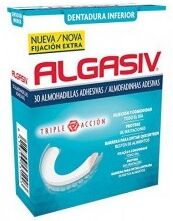
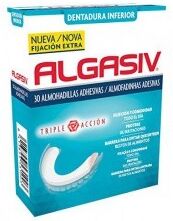
Algasiv Denture adhesive seals 30 UnitsHealth and Beauty Oral Care Algasiv Denture adhesive seals 30 Units Get the extra confidence you’re looking for. Sea Bond Denture Adhesive works differently. The cushiony, soft seal gives you all day hold without the ooze and mess of denture pastes. And it’s zinc-free. Now you can wear your dentures comfortably all day and still feel like yourself.11,21 £*Shipping: 3,99 £Secure redirect to the provider
-
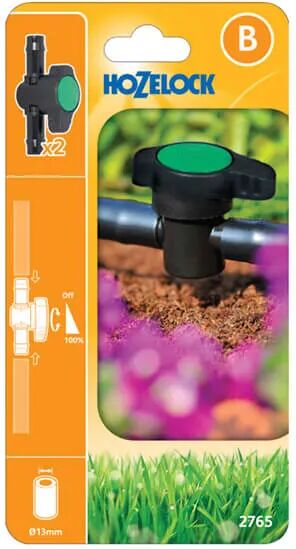
Hozelock Automatic Watering 13mm Flow Control ValvesTake full control of your garden irrigation with the Hozelock 13mm Flow Control Valves, specially designed to regulate water flow within low-pressure automatic watering systems. Perfect for use with Hozelock’s 13mm irrigation supply pipes, these inline valves give you precision control over individual watering zones. Whether you need to isolate parts of your system or simply adjust water flow to suit specific plant needs, these durable flow control valves are the ideal solution. Easily fitted in-line to your existing 13mm supply pipe, they allow you to reduce or shut off water flow as required, helping to conserve water and tailor delivery to each area of your garden. Made from UV-resistant materials, these valves are built to withstand outdoor conditions, ensuring long-lasting performance season after season. Ideal for use in flower beds, borders, vegetable gardens, greenhouses, and more, these valves make it easy to customise irrigation to suit plant type, location, and water requirements. Supplied as a set of two and covered by a manufacturer's 2-year guarantee.15,49 £*Shipping: 3,50 £Secure redirect to the provider
-
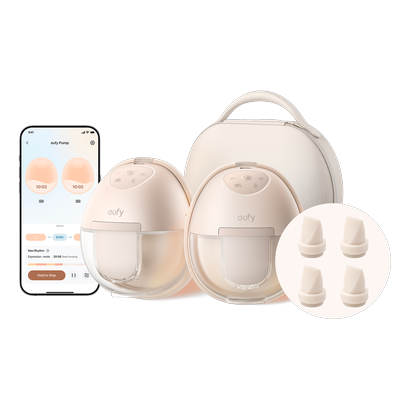
eufy Breast Pump S1 Pro & Duckbill Valves (4-Pack) eufy Breast Pump S1 Pro & Original Duckbill Valves (4-Pack)HSA/FSA Eligible: Save with pre-tax health dollars. Breast pump S1 pro: The Innovative Heated Wearable Breast Pump: Groundbreaking HeatFlow™ technology prevents clogs and boosts your output by 30%¹. Enjoy high-efficiency pumping with spa-like...279,99 $*Shipping: 0,00 $Secure redirect to the provider
-
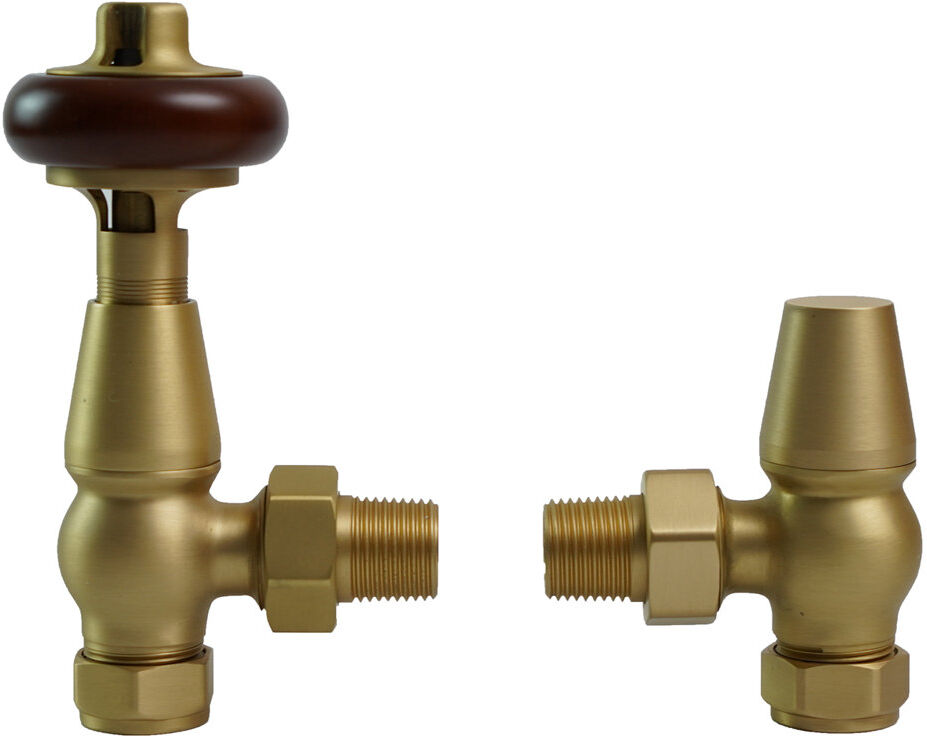
Belfry Bathroom Traditional TRV Thermostatic Radiator Valves Brushed BrassFeatures:-Material: Brass-Valve Type: Thermostatic-Style: Angled-Connections: 15mm inlet, 1/2" BSP MI outlet-Suitable for central heating radiators or towel rails-Colour: Antique Brass-LockShield IncludedNote:Images for illustration purposes colours may differ depending on your device screen and lighting Belfry Bathroom Finish: Brushed Brass42,99 £*Shipping: 4,99 £Secure redirect to the provider
-
'How many ml of NaOH?'
To determine the amount of NaOH in milliliters, you need to know the concentration of the NaOH solution and the amount of moles required for the reaction. Using the equation Molarity (M) = moles/volume (L), you can rearrange the equation to solve for volume (L) by dividing moles by the molarity. Then, convert the volume from liters to milliliters by multiplying by 1000. **
-
Where can one buy NaOH?
NaOH, also known as sodium hydroxide or caustic soda, can be purchased from various sources. It is commonly available at hardware stores, chemical supply companies, and online retailers. It is important to handle NaOH with care as it is a strong base and can cause burns and irritation to the skin and eyes. When purchasing NaOH, it is important to follow safety guidelines and store it in a secure location away from children and pets. **
-
Why is NaOH a base?
NaOH is a base because it dissociates in water to produce hydroxide ions (OH-) which can accept protons (H+) from acids, leading to the formation of water. This ability to accept protons makes NaOH a proton acceptor, or a Brønsted-Lowry base. Additionally, NaOH has a pH greater than 7, indicating its alkaline nature. **
-
How much 20% NaOH stock solution is needed to prepare 400 ml of a 15% NaOH solution from a 20% NaOH solution?
To prepare 400 ml of a 15% NaOH solution from a 20% NaOH stock solution, we can use the formula C1V1 = C2V2, where C1 is the concentration of the stock solution, V1 is the volume of the stock solution needed, C2 is the desired concentration, and V2 is the final volume of the solution. Plugging in the values, we get (20%)(V1) = (15%)(400 ml). Solving for V1, we find that V1 = (15%)(400 ml) / 20% = 300 ml. Therefore, 300 ml of the 20% NaOH stock solution is needed to prepare 400 ml of a 15% NaOH solution. **


Are we drinking HCl and NaOH?
No, we are not drinking HCl (hydrochloric acid) or NaOH (sodium hydroxide). Both of these substances are highly corrosive and can cause severe damage if ingested. HCl is a strong acid commonly used in industry and laboratory settings, while NaOH is a strong base also used in industrial processes. It is important to handle these chemicals with care and follow proper safety protocols to avoid accidents or harm. **
Is NaOH technically suitable for food?
NaOH, also known as sodium hydroxide, is not technically suitable for food. It is a highly caustic and corrosive substance that can cause severe burns and tissue damage if ingested. While it is sometimes used in food processing for purposes such as curing olives or controlling acidity, it must be used with extreme caution and in very small quantities. It is not safe for direct consumption and should not be used in food preparation without proper knowledge and expertise. **
Top-Angebote
Products related to NaOH:
-
Algasiv Denture adhesive sealsHealth and Beauty Oral Care Algasiv Denture adhesive seals Get the extra confidence you’re looking for. Sea Bond Denture Adhesive works differently. The cushiony, soft seal gives you all day hold without the ooze and mess of denture pastes. And it’s zinc-free. Now you can wear your dentures comfortably all day and still feel like yourself. Presentation 18 units.7,69 £*Shipping: 3,99 £Secure redirect to the provider
-
Algasiv Denture adhesive seals 18Health and Beauty Oral Care Algasiv Denture adhesive seals 18 Get the extra confidence you’re looking for. Sea Bond Denture Adhesive works differently. The cushiony, soft seal gives you all day hold without the ooze and mess of denture pastes. And it’s zinc-free. Now you can wear your dentures comfortably all day and still feel like yourself.7,69 £*Shipping: 3,99 £Secure redirect to the provider
-
Algasiv Denture adhesive seals 30 UnitsHealth and Beauty Oral Care Algasiv Denture adhesive seals 30 Units Get the extra confidence you’re looking for. Sea Bond Denture Adhesive works differently. The cushiony, soft seal gives you all day hold without the ooze and mess of denture pastes. And it’s zinc-free. Now you can wear your dentures comfortably all day and still feel like yourself.11,21 £*Shipping: 3,99 £Secure redirect to the provider
-
Hozelock Automatic Watering 13mm Flow Control ValvesTake full control of your garden irrigation with the Hozelock 13mm Flow Control Valves, specially designed to regulate water flow within low-pressure automatic watering systems. Perfect for use with Hozelock’s 13mm irrigation supply pipes, these inline valves give you precision control over individual watering zones. Whether you need to isolate parts of your system or simply adjust water flow to suit specific plant needs, these durable flow control valves are the ideal solution. Easily fitted in-line to your existing 13mm supply pipe, they allow you to reduce or shut off water flow as required, helping to conserve water and tailor delivery to each area of your garden. Made from UV-resistant materials, these valves are built to withstand outdoor conditions, ensuring long-lasting performance season after season. Ideal for use in flower beds, borders, vegetable gardens, greenhouses, and more, these valves make it easy to customise irrigation to suit plant type, location, and water requirements. Supplied as a set of two and covered by a manufacturer's 2-year guarantee.15,49 £*Shipping: 3,50 £Secure redirect to the provider
-
Why is there a difference between NaOH (s) and NaOH (aq)?
The difference between NaOH (s) and NaOH (aq) lies in their physical state and chemical behavior. NaOH (s) refers to solid sodium hydroxide, which exists as a crystalline substance at room temperature. On the other hand, NaOH (aq) refers to sodium hydroxide dissolved in water, forming an aqueous solution. When NaOH dissolves in water, it dissociates into Na+ and OH- ions, resulting in a highly alkaline solution with conductive properties. This difference in physical state and chemical behavior is due to the interaction of sodium hydroxide with water molecules, leading to distinct properties for the solid and aqueous forms. **
-
How many grams or liters of 15% NaOH can be obtained by diluting 100 liters of 50% NaOH? NaOH 15%: 116 g/ml, NaOH 50%: 164 g/ml.
To find out how many grams of 15% NaOH can be obtained by diluting 100 liters of 50% NaOH, we can use the formula: C1V1 = C2V2, where C1 is the concentration of the initial solution, V1 is the volume of the initial solution, C2 is the concentration of the final solution, and V2 is the volume of the final solution. Plugging in the values, we get: (50%)(100L) = (15%)(V2). Solving for V2, we get V2 = (50%)(100L) / (15%) = 333.33L. So, 333.33 liters of 15% NaOH can be obtained by diluting 100 liters of 50% NaOH. **
-
'How many ml of NaOH?'
To determine the amount of NaOH in milliliters, you need to know the concentration of the NaOH solution and the amount of moles required for the reaction. Using the equation Molarity (M) = moles/volume (L), you can rearrange the equation to solve for volume (L) by dividing moles by the molarity. Then, convert the volume from liters to milliliters by multiplying by 1000. **
-
Where can one buy NaOH?
NaOH, also known as sodium hydroxide or caustic soda, can be purchased from various sources. It is commonly available at hardware stores, chemical supply companies, and online retailers. It is important to handle NaOH with care as it is a strong base and can cause burns and irritation to the skin and eyes. When purchasing NaOH, it is important to follow safety guidelines and store it in a secure location away from children and pets. **
Similar search terms for NaOH
-
eufy Breast Pump S1 Pro & Duckbill Valves (4-Pack) eufy Breast Pump S1 Pro & Original Duckbill Valves (4-Pack)HSA/FSA Eligible: Save with pre-tax health dollars. Breast pump S1 pro: The Innovative Heated Wearable Breast Pump: Groundbreaking HeatFlow™ technology prevents clogs and boosts your output by 30%¹. Enjoy high-efficiency pumping with spa-like...279,99 $*Shipping: 0,00 $Secure redirect to the provider
-
Belfry Bathroom Traditional TRV Thermostatic Radiator Valves Brushed BrassFeatures:-Material: Brass-Valve Type: Thermostatic-Style: Angled-Connections: 15mm inlet, 1/2" BSP MI outlet-Suitable for central heating radiators or towel rails-Colour: Antique Brass-LockShield IncludedNote:Images for illustration purposes colours may differ depending on your device screen and lighting Belfry Bathroom Finish: Brushed Brass42,99 £*Shipping: 4,99 £Secure redirect to the provider
-
Belfry Bathroom Traditional TRV Thermostatic Radiator Valves Nickel BlackFeatures:-Material: Brass-Valve Type: Thermostatic-Style: Angled-Connections: 15mm inlet, 1/2" BSP MI outlet-Suitable for central heating radiators or towel rails-Colour: Antique Brass-LockShield IncludedNote:Images for illustration purposes colours may differ depending on your device screen and lighting Belfry Bathroom Finish: Nickel Black42,99 £*Shipping: 4,99 £Secure redirect to the provider
-
Belfry Bathroom Traditional TRV Thermostatic Radiator Valves Polished BrassFeatures:-Material: Brass-Valve Type: Thermostatic-Style: Angled-Connections: 15mm inlet, 1/2" BSP MI outlet-Suitable for central heating radiators or towel rails-Colour: Antique Brass-LockShield IncludedNote:Images for illustration purposes colours may differ depending on your device screen and lighting Belfry Bathroom Finish: Polished Brass42,99 £*Shipping: 4,99 £Secure redirect to the provider
-
Why is NaOH a base?
NaOH is a base because it dissociates in water to produce hydroxide ions (OH-) which can accept protons (H+) from acids, leading to the formation of water. This ability to accept protons makes NaOH a proton acceptor, or a Brønsted-Lowry base. Additionally, NaOH has a pH greater than 7, indicating its alkaline nature. **
-
How much 20% NaOH stock solution is needed to prepare 400 ml of a 15% NaOH solution from a 20% NaOH solution?
To prepare 400 ml of a 15% NaOH solution from a 20% NaOH stock solution, we can use the formula C1V1 = C2V2, where C1 is the concentration of the stock solution, V1 is the volume of the stock solution needed, C2 is the desired concentration, and V2 is the final volume of the solution. Plugging in the values, we get (20%)(V1) = (15%)(400 ml). Solving for V1, we find that V1 = (15%)(400 ml) / 20% = 300 ml. Therefore, 300 ml of the 20% NaOH stock solution is needed to prepare 400 ml of a 15% NaOH solution. **
-
Are we drinking HCl and NaOH?
No, we are not drinking HCl (hydrochloric acid) or NaOH (sodium hydroxide). Both of these substances are highly corrosive and can cause severe damage if ingested. HCl is a strong acid commonly used in industry and laboratory settings, while NaOH is a strong base also used in industrial processes. It is important to handle these chemicals with care and follow proper safety protocols to avoid accidents or harm. **
-
Is NaOH technically suitable for food?
NaOH, also known as sodium hydroxide, is not technically suitable for food. It is a highly caustic and corrosive substance that can cause severe burns and tissue damage if ingested. While it is sometimes used in food processing for purposes such as curing olives or controlling acidity, it must be used with extreme caution and in very small quantities. It is not safe for direct consumption and should not be used in food preparation without proper knowledge and expertise. **
* All prices are inclusive of VAT and, if applicable, plus shipping costs. The offer information is based on the details provided by the respective shop and is updated through automated processes. Real-time updates do not occur, so deviations can occur in individual cases. ** Note: Parts of this content were created by AI.